
Sacred architecture has long served as an earthly reflection of divine contemplation. Across centuries, master builders, stone carvers, and theologians have collaborated to erect monuments that synthesize engineering innovation with Christian theology. From the vaulted ceilings of medieval Europe to modern structural marvels in South America, Christian sanctuaries remain some of the most enduring monuments of human civilization.
This documented analysis takes readers through a theological and architectural journey to discover the 10 most beautiful churches on the planet, combining historical records, structural data, and spiritual heritage.
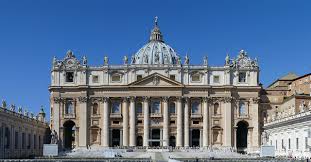
1. St. Peter’s Basilica (Vatican City)
Location: Vatican City (Rome, Italy)
Style: Renaissance / High Baroque
Architects: Donato Bramante, Michelangelo Buonarroti, Gian Lorenzo Bernini
Key Feature: Michelangelo's Dome & Bernini's Baldacchino
Consecrated in 1626 after 120 years of construction, St. Peter’s Basilica stands as the spiritual center of Roman Catholicism. Built over the historical burial site of Saint Peter the Apostle, the basilica represents a peak achievement of High Renaissance and Baroque art.
Michelangelo’s famous dome rises to an internal height of 136.5 meters, serving as a structural marvel of its era. Inside, Bernini’s monumental bronze Baldacchino stands directly over the papal altar, anchoring the space where theology meets physical form.
2. Basílica de la Sagrada Família (Barcelona, Spain)
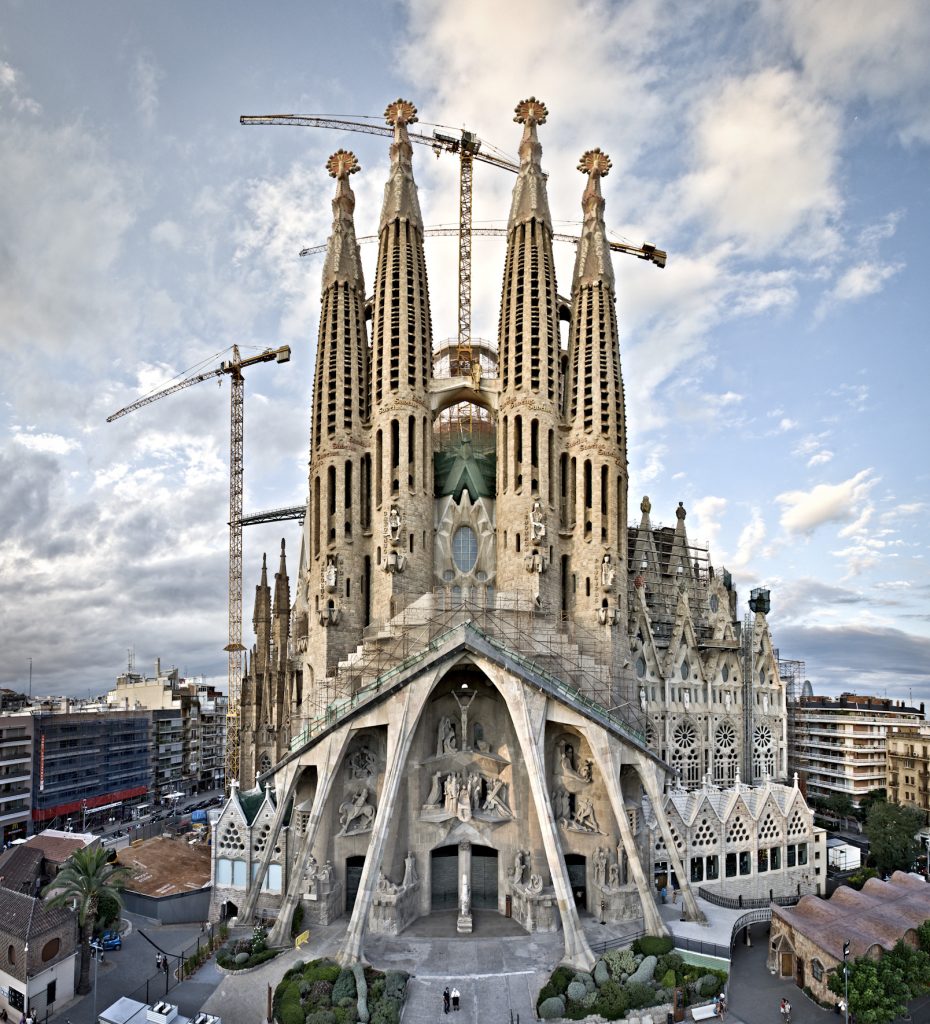
Designed by the servant of God Antoni Gaudí, the Basílica de la Sagrada Família is a masterpiece of Catalan Modernism and organic Christian symbolism. Construction began in 1882 and continues into the modern era, guided by Gaudí’s meticulous geometric principles.
Gaudí designed the interior columns to resemble a living forest, with light filtering through stained glass windows to create a dynamic polychromatic glow. The eighteen planned towers symbolize the Twelve Apostles, the Four Evangelists, the Virgin Mary, and Jesus Christ at the central peak.
3. Hagia Sophia (Istanbul, Turkey)
Originally constructed as a Byzantine Greek Orthodox cathedral by Emperor Justinian I between 537 and 537 AD, Hagia Sophia (Holy Wisdom) transformed sacred architecture for over a millennium.
Architects Isidore of Miletus and Anthemius of Tralles utilized revolutionary pendentive technology to place a massive 31-meter dome over a rectangular nave. This engineering breakthrough created an interior space that contemporary chroniclers described as appearing “suspended from heaven by a golden chain.”
4. Chartres Cathedral (Chartres, France)
+--------------------------------------------------------------------------+
|                      CHARTRES CATHEDRAL METRICS                          |
+--------------------------------------------------------------------------+
|  [ Consecration ]  |  [ Stained Glass Preservation ]  |  [ Style ]      |
|     1260 AD        |    176 Original Windows Saved     | High Gothic     |
+--------------------------------------------------------------------------+
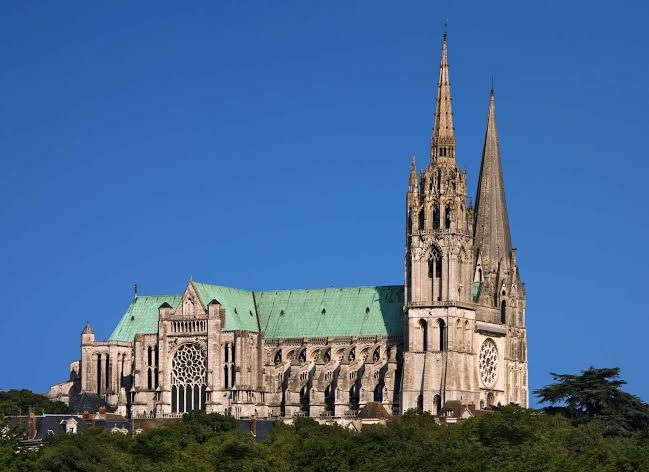
A UNESCO World Heritage Site, Chartres Cathedral (Cathédrale Notre-Dame de Chartres) represents the pinnacle of High Gothic architecture. Rebuilt after a fire in 1194, it remains remarkably intact in both structure and ornamentation.
Chartres is famous for its mid-12th-century stained glass windows, covering over 2,600 square meters. The unique cobalt pigment—known historically as “Chartres blue”—filters sunlight into an ethereal blue atmosphere designed to elevate the human mind toward divine contemplation.
5. Las Lajas Sanctuary (Ipiales, Colombia)
Perched dramatically inside the canyon of the Guáitara River, Santuario de las Lajas is a Gothic Revival pilgrimage church built between 1916 and 1949. The church was erected to commemorate a miraculous Marian apparition reported in 1754.
| Structural Aspect | Engineering Specification |
| Bridge Foundation | 50-meter-high double-arch bridge over the river canyon |
| Architectural Style | Neo-Gothic with local gray and white stone masonry |
| Altar Structure | Built directly against the natural canyon rock wall |
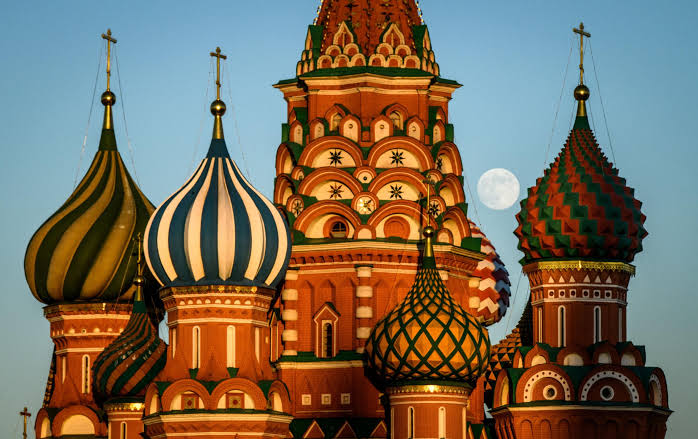
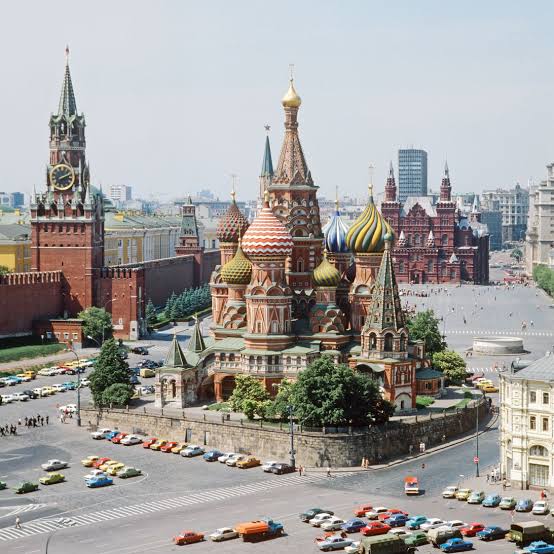
6. St. Basil’s Cathedral (Moscow, Russia)
Officially known as the Cathedral of the Intercession of the Most Holy Theotokos on the Moat, St. Basil’s Cathedral was commissioned by Tsar Ivan IV in 1555 to commemorate military victories.
Its distinctive architecture features nine independent chapels arranged around a central core, each topped with a uniquely patterned onion dome. The vibrant colors and geometric diversity reflect traditional Russian wood-carving aesthetics translated into durable brick and stone.
7. Church of the Nativity (Bethlehem, Palestine)
As one of the oldest continuously operating Christian churches, the Church of the Nativity holds profound theological importance as the traditional birthplace of Jesus Christ.
The original basilica was commissioned by Saint Helena and Emperor Constantine in 327 AD. Restored under Emperor Justinian in the 6th century, the structure features ancient mosaic floor fragments, early Christian frescoes, and the Grotto of the Nativity anchored by a 14-pointed silver star.
8. Duomo di Milano (Milan, Italy)
The Metropolitan Cathedral-Basilica of the Nativity of Saint Mary took nearly six centuries to complete (1386–1965). Covering 11,700 square meters, it is the largest church in Italy and the second-largest cathedral in the world.
Classic Italian Brick Core ────> Candoglia Pink Marble Cladding
                                        │
                                        ▼
                              135 Spires & 3,400+ Statues
The cathedral exterior is adorned with over 3,400 statues and 135 spires, crafted entirely from pink-tinted Candoglia marble. Atop the highest spire stands the gilded Madonnina, a protective symbol for the city of Milan.
9. Hallgrímskirkja (Reykjavík, Iceland)
Designed by state architect Guðjón Samúelsson in 1937 and completed in 1986, Hallgrímskirkja is an extraordinary example of Expressionist sacred architecture.
The exterior structure draws direct inspiration from Iceland’s volcanic landscape, mimicking basalt lava columns. Inside, the minimalist Lutheran interior emphasizes light and acoustics, featuring a monumental pipe organ with 5,275 pipes crafted by Johannes Klais of Bonn.
10. Cathedral of Saint Croix (Orléans, France)
Associated closely with Joan of Arc, who attended Mass here during the Siege of Orléans in 1429, the Sainte-Croix Cathedral is a landmark of French Gothic architecture.
The cathedral features dramatic flying buttresses, intricate rose windows, and nineteenth-century stained glass panels chronicling the life and martyrdom of Saint Joan of Arc. Its towering twin spires dominate the Loire Valley skyline, symbolizing resilience and faith.
Comparative Architectural Overview
| Church Name | Primary Style | Construction Period | Key Architectural Significance |
| St. Peter’s Basilica | Renaissance / Baroque | 1506–1626 | Largest interior volume; papal center |
| Sagrada Família | Modernism / Organic Gothic | 1882–Present | Hyperboloid structural geometry |
| Hagia Sophia | Byzantine | 532–537 AD | Pendentive dome engineering model |
| Chartres Cathedral | High Gothic | 1194–1220 | 13th-century preserved stained glass |
| Las Lajas Sanctuary | Neo-Gothic | 1916–1949 | Canyon bridge integration |
| St. Basil’s Cathedral | Russian Traditional | 1555–1561 | Multi-towered onion dome arrangement |
| Church of the Nativity | Early Christian / Byzantine | 327–565 AD | Historical locus of the Incarnation |
| Duomo di Milano | Gothic | 1386–1965 | Marble sculptural detail & spires |
| Hallgrímskirkja | Expressionist | 1945–1986 | Volcanic basalt column design |
| Cathedral of Sainte-Croix | Rayonnant / Neo-Gothic | 1287–1829 | Historic association with Joan of Arc |
Conclusion
When we explore and discover the 10 most beautiful churches on the planet by bethany, we see more than mere stone and mortar. These structures embody humanity’s quest to express spiritual truth through engineering precision, artistic excellence, and enduring faith.
