
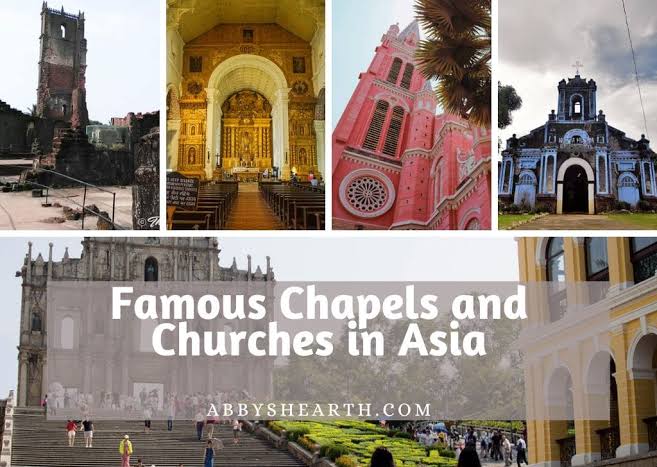
Across the Asian continent, Christian sacred architecture stands as a powerful testament to historical crossroads, cultural integration, and enduring spiritual devotion. While Asia is globally renowned for its ancient temples and pagodas, its ecclesial landscape features some of the world’s most breathtaking basilicas, cathedrals, and shrines.
This deep-dive architectural and historical feature explores the top 5 most beautiful churches in Asia, examining their stylistic evolution, structural significance, and active role in contemporary religious life.
1. Basilica of Our Lady of Good Health (Vailankanni, India)
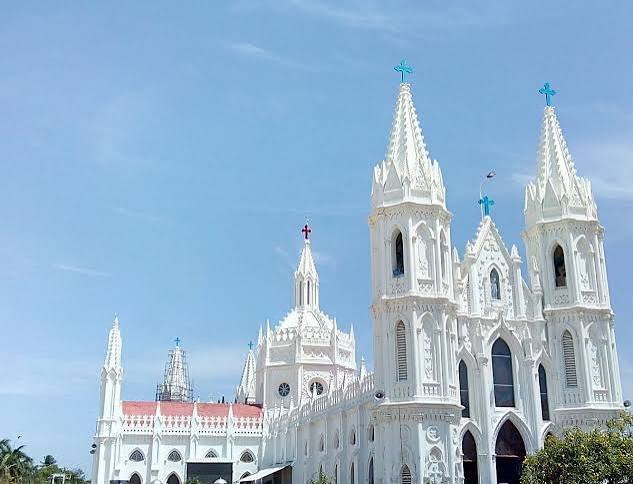
Located in the coastal town of Velankanni in Tamil Nadu, the Basilica of Our Lady of Good Health—frequently dubbed the “Lourdes of the East”—is one of the most visited Christian pilgrimage destinations in South Asia.
+-------------------------------------------------------------------------+
|                BASILICA OF OUR LADY OF GOOD HEALTH                      |
+-------------------------------------------------------------------------+
| Architectural Style : Gothic Revival & Traditional South Indian Accents |
| Primary Feature     : Bright White Exterior Facade & Soaring Twin Spires|
| Significance        : Marian Apparition Site & Pontifical Basilica      |
+-------------------------------------------------------------------------+
Architectural & Historical Highlights:
-
Gothic Revival Fusion: Built originally as a small chapel in the 16th century following reported apparitions of the Virgin Mary, the structure expanded over centuries into a monumental Gothic Revival basilica.
-
Visual Impact: The pristine white exterior creates a stark, majestic contrast against the Bay of Bengal coastline. The central nave and soaring spires draw heavily on medieval European cathedral geometry while incorporating local structural engineering adaptations.
-
Pilgrimage Center: Elevated to a Minor Basilica by Pope John XXIII in 1962, it accommodates millions of pilgrims annually across diverse interfaith backgrounds.
2. Basilica of Santo Niño (Cebu City, Philippines)
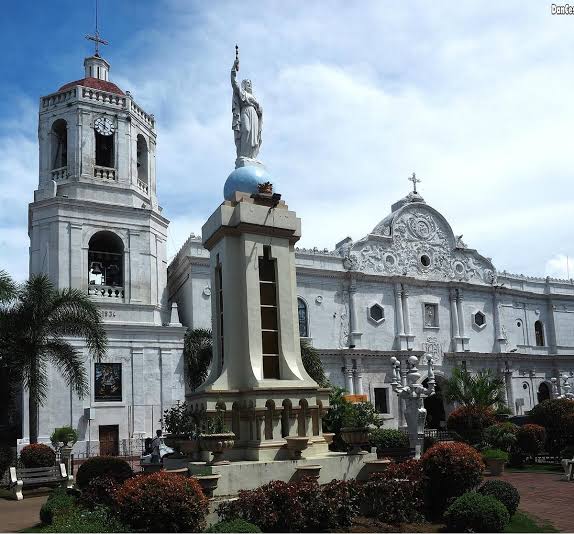
As the oldest Roman Catholic church in the Philippines, the Basilica Minore del Santo Niño in Cebu City represents the foundational bedrock of Christianity in Southeast Asia.
                  [ Founded: 1565 by Fr. Andrés de Urdaneta ]
                                     │
                                     ▼
                [ Architectural Style: Earthquake Baroque ]
                                     │
                                     ▼
             [ Key Landmark: Encased Relic of the Holy Child ]
Architectural & Historical Highlights:
-
Earthquake Baroque Design: Constructed from indigenous coral stones and solid masonry, the current structure (completed in 1739) was specifically engineered to withstand seismic activity and typhoons.
-
Façade Artistry: The exterior blends Renaissance motifs with subtle neoclassical elements and indigenous carved patterns, showcasing an early synthesis of Spanish colonial aesthetics and native craftsmanship.
-
Cultural Hub: The basilica houses the historic wooden image of the Santo Niño de Cebú, presented by Ferdinand Magellan in 1521, making it a cornerstone of Asian Christian heritage.
3. St. Joseph Cathedral (Hanoi, Vietnam)
Standing in the heart of Hanoi’s historic Old Quarter, St. Joseph Cathedral (Nhà thờ Lớn Hà Nội) serves as the seat of the Roman Catholic Archdiocese of Hanoi and a prime example of late 19th-century French colonial Gothic Revival architecture.
| Feature | Description |
| Year Opened | 1886 (Inaugurated on Christmas Eve) |
| Architectural Model | Inspired by Notre-Dame de Paris |
| Key Materials | Red brick core faced with baked clay and lime plaster |
| Interior Elements | Stained glass windows from France & traditional gilded wood altars |
Architectural & Historical Highlights:
-
European-East Asian Synthesis: While the exterior façade mirrors classic French Gothic proportions with twin bell towers, pointed arches, and a central rose window, the interior features traditional Vietnamese wood carving and gold-leaf ornamentation around the main altar.
-
Urban Identity: The weathered stone exterior has aged into an iconic symbol of Hanoi’s architectural layerings, bridging historical European influences with vibrant local parish life.
4. St. John’s Cathedral (Kolkata, India)
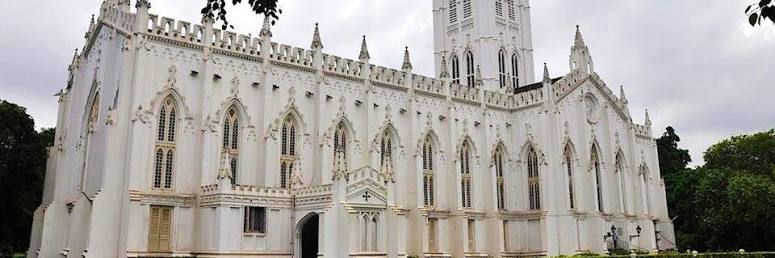
Constructed in 1787, St. John’s Cathedral in Kolkata stands as one of the earliest major structural landmarks of Anglican architecture in Asia.
[ Classical Neoclassical Layout ] ──> [ Greek Doric Columns ] ──> [ Spire Built with Charnockite Stone ]
Architectural & Historical Highlights:
-
Neoclassical Masterpiece: Designed by Lieutenant James Agg, the cathedral was modeled after St Martin-in-the-Fields in London. It features a prominent square steeple and massive Greek Doric columns.
-
Materiality & Craftsmanship: The building utilizes a combination of brick, stone, and specialized local mortar (chunam), allowing the classical structure to endure West Bengal’s tropical climate.
-
Historical Artifacts: Inside, the cathedral houses historic memorials, rare pipe organs, and Johann Zoffany’s famous 18th-century altarpiece painting of The Last Supper, which uniquely features prominent Kolkata figures of the era as apostles.
5. Oura Church (Nagasaki, Japan)
Built in 1864 by French missionaries of the Paris Foreign Missions Society, Oura Church (Ōura Tenshudō) in Nagasaki is Japan’s oldest surviving church building and a designated National Treasure.
+-------------------------------------------------------------------------+
|                            OURA CHURCH                                  |
+-------------------------------------------------------------------------+
| Historical Designation : UNESCO World Heritage Site (Hidden Christians) |
| Architectural Mix        : Western Gothic Elements & Japanese Carpenters|
| Cultural Symbolism       : Discovery of the "Kakure Kirishitan" (1865)  |
+-------------------------------------------------------------------------+
Architectural & Historical Highlights:
-
Hybrid Construction: Oura Church exemplifies a rare fusion of Western Gothic design executed by traditional Japanese master carpenters (Miyadaiku). The interior ceiling utilizes a traditional Japanese timber frame adaptation of European rib vaulting.
-
Stained Glass Heritage: The church retains imported 19th-century French stained glass, casting vibrant multicolored light across its octagonal central tower.
-
Symbol of Resilience: It stands as a monument to Japan’s “Hidden Christians” (Kakure Kirishitan), who preserved their faith secretly for over two centuries during the Tokugawa shogunate’s ban on Christianity.
Comparative Architectural Overview
| Church Name | Location | Primary Architectural Style | Key Historical Milestone |
| Our Lady of Good Health | India | Gothic Revival | 1962 Elevated to Minor Basilica |
| Basilica of Santo Niño | Philippines | Earthquake Baroque | 1565 Founded during Spanish Era |
| St. Joseph Cathedral | Vietnam | French Gothic Revival | 1886 Opened in Hanoi Old Quarter |
| St. John’s Cathedral | India | Neoclassical | 1787 Early Anglican Architecture |
| Oura Church | Japan | Gothic-Japanese Hybrid | 2018 UNESCO World Heritage Site |
Conclusion
The top 5 most beautiful churches in Asia by bethany are far more than historical relics; they are living centers of worship, community life, and architectural innovation. By blending Western structural frameworks with native building materials and local artistry, these sacred spaces remain enduring symbols of faith and cultural dialogue across the Asian continent.
